
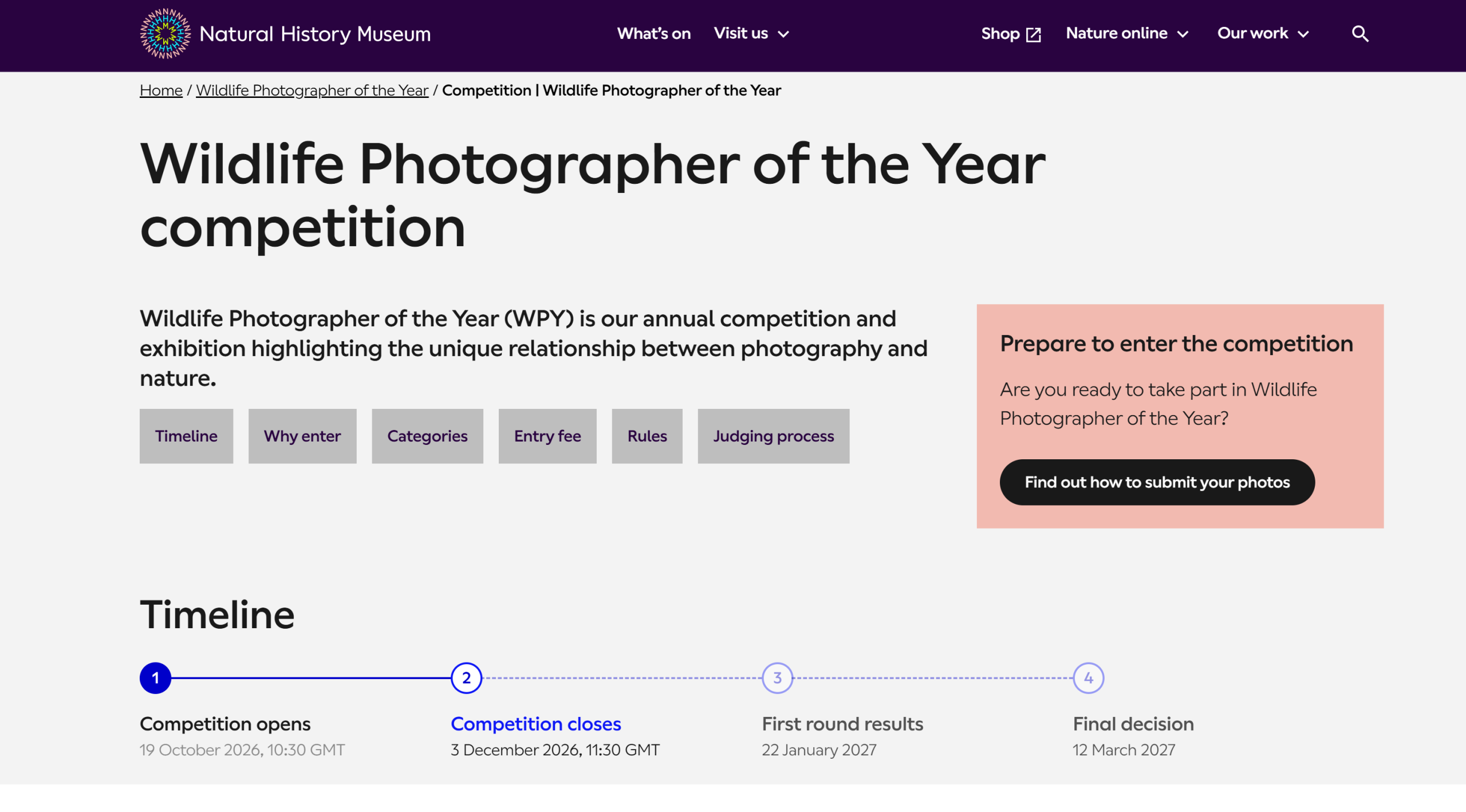
Deadline: 3 December 2026
Wildlife Photographer of the Year 2027 (63rd edition)
Cash Prize / December / Exhibition / Fine Arts & Photography / Open to All / Trophy / Certificate69 views
Organizer: Natural History Museum, London
Location: London, United Kingdom (organizer's base), open to photographers worldwide
Deadline:
- Entries open: 19 October 2026, 10:30 GMT
- Entries close: 3 December 2026, 11:30 GMT (morning, not midnight)
- First-round results: 22 January 2027
- Final decision: 12 March 2027
Competition Category: 16 adult categories, listed individually:
- Animals in their Environment
- Animal Portraits
- Behaviour: Amphibians and Reptiles
- Behaviour: Birds
- Behaviour: Invertebrates
- Behaviour: Mammals
- Plants and Fungi
- Under Water
- Urban Wildlife
- Natural Artistry
- Oceans and Wetlands: The Bigger Picture — new for 2027, combining the former separate Oceans and Wetlands categories
- Positive Action — brand new for 2027, highlighting a conservation success, a moment of connection, or an optimistic reflection of change or engagement with the natural world
- Photojournalism
- Photojournalist Story Award — a story of six to ten photographs, up to two stories per entrant
- Rising Star Award (ages 18–26) — six to ten photographs, one portfolio per entrant
- Portfolio Award (ages 27 and over) — six to ten photographs, one portfolio per entrant
The Young Wildlife Photographer of the Year competition has three age groups: 10 and under, 11–14, and 15–17
Eligibility: Open to amateur and professional photographers worldwide; the Adult Competition is open to anyone aged 18 or over on 3 December 2026; the Young competition is for photographers aged 17 and under; excluded are people involved in organizing or judging the competition (and their partners and families), employees of the Natural History Museum Trading Company Limited, the Trustees of the Natural History Museum, and known Official Sponsors; photographs must be original, camera-captured images taken on or after 1 November 2021; AI-generated images and AI-added content are banned, as is prohibited digital manipulation; farm animals, pets, and cultivated plants or fungi are excluded; any interference with animals or baiting is prohibited
Entry Fee: £35 per adult entrant (one-off, non-refundable, for a maximum of 25 photographs in total across categories); free entry for all Young competition entrants, for entrants aged 18 to 26 on the closing date, and for residents of the 114 countries listed in the rules (largely in Africa, Southeast Asia, and Central and South America, historically under-represented in the competition; proof of residency may be requested); the fee is payable only through the entry portal by card, Apple Pay, Google Pay or Revolut
Prizes/Awards:
- Grand Title winner (Wildlife Photographer of the Year): up to £15,000 (boosted from £10,000 for 2027)
- Adult category winners: £1,250 each
- Portfolio Award: £2,500
- Photojournalist Story Award: £2,500
- Rising Star Portfolio Award: £1,500
- Young Grand Title: an additional £1,500; young age-group winners £500, runners-up £150
- Other benefits: trophies, personalised certificates, selected trips to the awards ceremony in London, publication in the Wildlife Photographer of the Year portfolio book, inclusion in the Natural History Museum exhibition and its international tour
- Copyright remains with the photographer; awarded photographs are licensed to the Museum for five years from notification of the award (seven years for print and publication rights), covering exhibition and touring, promotion of the competition, and sub-licensing to the press and Official Sponsors
Core Introduction: Founded and produced by the Natural History Museum in London, Wildlife Photographer of the Year is among the world's most influential nature photography competitions, now in its 63rd year for 2027. It comprises an Adult Competition and a Young Competition, spanning animal behaviour, natural habitats, species portraits, the underwater world, urban wildlife, plants and fungi, natural artistry, photojournalism and conservation action, and invites work exploring animal behaviour, natural habitats, conservation issues, and the relationship between people and wildlife. Two significant changes apply for 2027: the new Positive Action category recognises successful conservation efforts, moments of connection with nature, and encouraging shifts in how people engage with the environment; and the former Oceans: The Bigger Picture and Wetlands: The Bigger Picture categories are merged into Oceans and Wetlands: The Bigger Picture to highlight the unique combined role of marine and freshwater environments. The Grand Title prize is simultaneously raised from £10,000 to £15,000. Technical requirements: JPEG files in Adobe RGB (1998), 1,920 pixels along the longest edge; adult entrants may submit up to 25 photographs in total across categories, young entrants up to 10; portfolio and story categories require a series of six to ten images. An international jury assesses entries anonymously, considering originality, storytelling and ethical photographic practice; shortlisted photographs undergo authenticity checks and must be backed by RAW files or original untouched JPEGs, with disqualification for failure to provide them. The 2026 62nd edition drew a record 65,403 entries from 121 countries and territories, with the Grand Title going to Italian photographer Federico Veronesi for "The Aftermath." Kathy Moran chairs the jury.